

Driverless Waymo vehicles are now an everyday sight on Austin streets. Since 2025, riders have been hailing them through the Uber app, and the white robotaxis with their rooftop sensors navigate downtown, South Congress, and the neighborhoods in between with no one behind the wheel. Most rides end uneventfully. But when a crash involves a vehicle that has no driver at all, the people injured face a question no ordinary wreck raises: who exactly is responsible?
If you were hurt in a collision involving a Waymo — as a passenger, another driver, a cyclist, or a pedestrian — the answer matters enormously. There is no driver to cite, no driver’s insurance adjuster to call, and the party on the other side is one of the best-resourced technology companies in the world. This guide explains how liability works when a robotaxi crashes in Texas, what evidence exists, and the steps that protect your claim.
The vehicle may be new. Your rights are not. Texas law has always held those who cause harm accountable, and that does not change because the one causing harm is a computer.
A Waymo Is Not a Tesla: True Driverless Changes the Liability Question
Most “self-driving” vehicles on Texas roads are not truly driverless. Systems like Tesla Autopilot are Level 2 driver-assistance features that require an attentive human at the wheel — we covered how liability works in those crashes in our guide to Tesla Autopilot and self-driving car accidents in Texas. The National Highway Traffic Safety Administration classifies automation on a scale from Level 0 to Level 5, and that classification drives the legal analysis.
Waymo operates differently. As of this writing, its Austin vehicles run at Level 4 — fully autonomous within a defined service area, with no safety driver on board. The company’s own safety framework describes the automated driving system as the driver. That distinction transforms the liability question: there is no human driver whose attention can be blamed, which moves the focus onto the company that built, tested, and deployed the system.
KEY TAKEAWAY
Unlike driver-assistance systems that keep a human legally responsible behind the wheel, a Waymo robotaxi has no driver — the automated system is doing the driving. When it fails, the analysis shifts to the company operating it, which changes how an autonomous car accident claim is investigated and pursued.
Who Can Be Held Liable in a Robotaxi Crash
The company operating the automated driving system. Texas law addresses automated motor vehicles in Chapter 545 of the Texas Transportation Code, which contemplates vehicles operating without a human driver and sets requirements including insurance and the recording of information about the automated driving system. When the system makes an unsafe decision — misjudging a turn, failing to yield, stopping unpredictably — the operator of that system is the natural focus of a negligence or product liability claim.
The manufacturer, under product liability law. Where the crash traces to a defect in how the driving system was designed, built, or represented, Chapter 82 of the Texas Civil Practice and Remedies Code governs product liability claims. Design defects, manufacturing defects, and failures to warn each provide a distinct path, as we explain in our guide to Texas product liability claims.
Another negligent driver. Robotaxis are often the victims of ordinary human negligence. A driver who rear-ends a Waymo that braked for a pedestrian is liable the same way they would be in any car accident — and the robotaxi’s cameras will usually have recorded them doing it.
Component suppliers and maintenance providers. Sensors, braking systems, and software updates come from a supply chain. A defective part or a botched service can put responsibility on parties beyond the operator.
KEY TAKEAWAY
Liability in a Waymo crash may rest with the system’s operator, the manufacturer under Texas product liability law, another negligent driver, or a supplier — and sometimes several at once. Identifying every responsible party early is central to a strong autonomous car accident claim.
If You Were a Passenger in the Waymo
Passengers are generally in the strongest liability position: they were not driving, so fault arguments rarely touch them. A passenger injured in a robotaxi crash may have claims against the operator, another involved driver, or both. Commercial autonomous fleets carry insurance, and Texas law requires coverage for automated vehicles operating on public roads under the same Chapter 545 framework discussed above.
One wrinkle is the booking layer. Austin’s Waymo rides are dispatched through the Uber app under a partnership between the companies. Which entity bears responsibility — and whose coverage applies — depends on the operating relationship and the facts of the crash. It resembles the layered questions we unpacked in our guide to rideshare accident settlements, with the added twist that the “driver” is software. Claims involving Uber and Lyft vehicles already require untangling corporate and insurance layers; robotaxis add one more.
KEY TAKEAWAY
Passengers hurt in a robotaxi are rarely blamed for the crash, but their claims run through layered corporate and insurance structures — the operator, the booking platform, and any other involved driver. Identifying those layers correctly and early is what protects a claim involving an Uber-dispatched vehicle.
If a Waymo Hit You: Drivers, Cyclists, and Pedestrians
Not everyone injured by a robotaxi is riding in one. Austin drivers, cyclists, and pedestrians share every street of the service area with these vehicles. Reported incidents involving autonomous vehicles nationally have included failures to fully clear crosswalks, unexpected stops that cause following collisions, and misjudged interactions with cyclists — the kinds of events we examined in our look at autonomous car accidents and statistics.
For a pedestrian struck by any vehicle, the injuries are often severe, and when the vehicle is driverless the claim proceeds against the operating company rather than an individual. The good news for injured people: the vehicle almost certainly recorded the entire event.
The Evidence Advantage — and the Evidence Problem
A Waymo records more about a crash than any human witness ever could: continuous camera, lidar, and radar streams, plus system logs showing what the vehicle detected, what it predicted, and how it responded. Federal reporting requirements, including NHTSA’s standing order on crashes involving automated driving systems, generate additional records.
Here is the problem: nearly all of that evidence lives in the company’s hands. It must be formally preserved and requested — quickly — through spoliation demands and, when necessary, litigation discovery. An injured person who waits months hands the advantage to the defense. The vehicle data will either be your claim’s strongest proof or its biggest missing piece, and which one usually comes down to timing.
KEY TAKEAWAY
Robotaxi crashes are usually documented in extraordinary detail — by the defendant. Camera, lidar, and system-log evidence must be formally preserved and demanded early. Acting fast is the difference between using the vehicle’s own data to prove your claim and litigating around its absence.
Compensation, Comparative Fault, and the Two-Year Deadline
The compensation categories are the ones Texas recognizes in any serious injury case. Economic damages cover medical bills, future care, lost income, and reduced earning capacity. Non-economic damages cover pain, suffering, and the impact on your life. When injuries are life-altering, valuing catastrophic injuries correctly requires medical and economic experts, and no outcome can be guaranteed.
Texas follows a modified comparative negligence rule: your recovery is reduced by your percentage of fault, and being found more than 50% at fault bars recovery. Expect a well-funded defense to use the vehicle’s own recordings to argue that you — the other driver, the cyclist, the pedestrian — caused the crash. That is another reason early, independent investigation matters.
The deadline is the same as other injury claims: under Texas Civil Practice and Remedies Code Section 16.003, most personal injury lawsuits must be filed within two years of the crash. Given the data-preservation work these cases demand, two years is shorter than it sounds.
How LGR Law Firm Helps After a Driverless Vehicle Crash
At LGR Law Firm, we represent injured people in Austin and across Central Texas, with attorneys who understand both automated-vehicle technology and Texas product liability law. In a robotaxi crash, that work includes moving immediately to preserve the vehicle’s data, sending spoliation demands to the operating company, retaining accident reconstruction and automotive-technology experts, identifying every responsible party and layer of insurance, valuing your injuries and future needs accurately, and negotiating from evidence rather than hope. When a fair settlement is not offered, LGR is prepared to take a case to trial.
The initial consultation is free and carries no obligation, and personal injury cases are typically handled on a contingency basis, which generally means you do not pay attorney’s fees unless we recover for you. You should not have to take on a technology company alone.
If you were injured in a crash involving a Waymo or any driverless vehicle in Texas, contact LGR Law Firm for a free, no-obligation consultation at (512) 800-8000.
Frequently Asked Questions
Who is liable when a Waymo with no driver causes a crash?
When a fully driverless vehicle causes a crash, responsibility generally points to the company operating the automated driving system rather than a human driver, because there is no human driver. Texas law addresses automated vehicles operating without a driver, and claims may be framed as negligence, product liability, or both. Other parties — another negligent driver, a component supplier, or a maintenance provider — can also share responsibility depending on the facts.
Can I sue Waymo directly in Texas?
Possibly. If the automated driving system caused or contributed to the crash, a claim may be brought against the company under negligence or Texas product liability law. These cases are technical and data-intensive, and a large technology company will defend them with significant resources. An attorney can evaluate the vehicle data, crash evidence, and applicable law to determine whether a direct claim is supported.
I was a passenger in a Waymo during a crash. What are my rights?
Passengers are rarely at fault, which generally makes their claims more straightforward on liability. Depending on what happened, a passenger may have a claim against the robotaxi operator, another negligent driver, or both. Commercial autonomous fleets carry insurance, and Texas law requires coverage for automated vehicles. Prompt medical care and early documentation protect both your health and your claim.
Does booking the ride through the Uber app make Uber responsible too?
Not automatically. Waymo vehicles in Austin are dispatched through the Uber app under a partnership, but which company bears legal responsibility depends on the specific relationship, who operated the vehicle and its driving system, and the facts of the crash. Sorting out the corporate and insurance layers is one of the main reasons to involve an attorney early in a robotaxi injury claim.
What evidence exists after a robotaxi crash?
More than in almost any other kind of collision. Waymo vehicles record camera, lidar, and radar data along with detailed system logs showing what the vehicle detected and how it responded. That evidence is powerful but sits in the company’s hands and must be formally preserved and requested. Photographs, the police report, witness information, and your medical records remain essential as well.
How long do I have to file a Waymo accident claim in Texas?
In Texas, most personal injury claims must generally be filed within two years of the date of the crash, though specific circumstances can affect deadlines. Robotaxi cases involve time-sensitive data preservation and technical investigation, so acting well before the deadline protects the evidence your claim depends on.
This information is for educational purposes and does not constitute legal advice. Every case is unique — contact our office for a free consultation about your specific situation. Past results do not guarantee future outcomes.
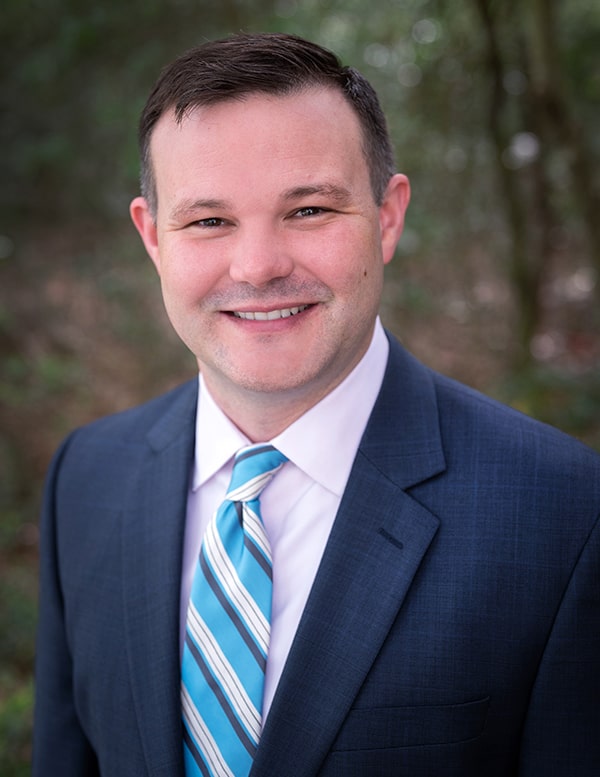
About The Author
Kenneth "Tray" Gober III, J.D., is the Managing Partner of Lee, Gober & Reyna, PLLC in Austin, Texas. A 2005 magna cum laude graduate of Texas A&M University and a cum laude graduate of Baylor Law School, Tray is admitted to the State Bars of Texas (Bar No. 24061986), Colorado, Louisiana and Pennsylvania. He is also admitted to the U.S. Supreme Court, U.S. Court of Appeals for the Fifth Circuit, U.S. District Court — Western District of Texas and U.S. District Court — Eastern District of Texas.
He represents personal injury clients across Texas in car accidents, truck accidents, autonomous vehicle claims, wrongful death, drunk driving collisions, premises liability, and product liability matters. He is one of Texas's most frequently quoted legal voices on the law surrounding autonomous vehicles and AI-driven transportation. Tray also served as an adjunct professor of Paralegal Studies at the University of Texas School of Law.