

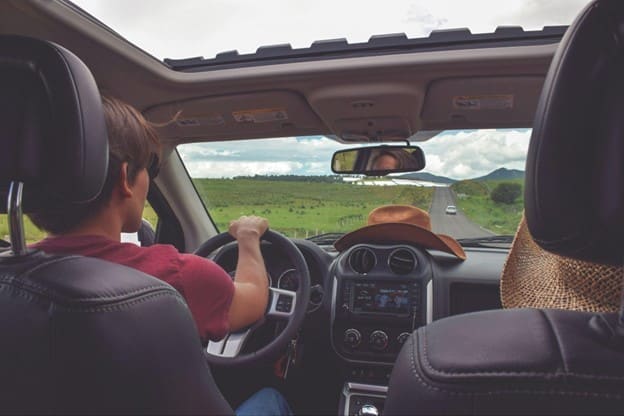
Rideshare and delivery apps are woven into daily life in Austin. On any given evening, tens of thousands of Uber, Lyft, DoorDash, and Uber Eats trips are moving across I-35, MoPac, Highway 183, and the neighborhoods in between. When one of those vehicles is involved in a crash, the legal aftermath is far more complicated than an ordinary car accident — multiple insurance policies, a corporate defendant with experienced lawyers, and time-sensitive app data that can disappear. LGR Law Firm has built a focused rideshare and delivery-app accident practice to meet those challenges head-on for injured Austinites.
Whether you were a passenger, another driver, a cyclist, or a pedestrian, our Austin rideshare attorneys move quickly to preserve evidence, identify every responsible party and insurance policy, and pursue the full value of your claim — prepared to take the case to trial if the insurers will not be reasonable.
Your Legal Advocates in Complex Rideshare Claims in Austin
The encouraging part of these claims is that they often involve substantially more insurance coverage than a typical fender-bender. The challenge is knowing how to access it. Rideshare and delivery-app companies and their insurers defend these cases aggressively, and they have the resources to outwait and outspend unrepresented victims. We level that playing field. Our team moves on the evidence in the first days, builds the case for full economic and non-economic damages, and refuses to accept lowball settlements that ignore the long-term impact of a serious injury.
How Rideshare Accidents Are Different from Traditional Car Crashes
A standard two-car crash usually involves two drivers and two insurance policies. A rideshare or delivery-app crash can involve the driver’s personal insurer, the rideshare or delivery company’s commercial coverage, another driver’s insurer, and sometimes your own policy — all at once. Each company has an incentive to point at the others, and the coverage that applies can hinge on a single detail: exactly what the driver was doing in the app at the moment of the crash.
That is why two rideshare crashes that look identical on the road can have completely different insurance outcomes. The driver may have been off-duty, waiting for a ride request, en route to a pickup, or carrying a passenger — and each state triggers a different policy. The same logic, with company-specific wrinkles, applies to food-delivery crashes. Sorting out the right answer demands fast action and the ability to push back against corporate defendants.
The Three Insurance Phases of a Rideshare Trip
Texas regulates transportation network companies (TNCs) like Uber and Lyft under Chapter 2402 of the Texas Occupations Code, which sets minimum insurance requirements that change depending on the driver’s status in the app. In practice, three coverage “phases” matter:
Phase 0 — App off. The driver is not logged in and is driving for personal reasons. Only their personal auto insurance applies, just like any other driver. If their personal policy excludes commercial use, even that coverage can be disputed.
Phase 1 — App on, waiting for a request. The driver is logged in and available but has not accepted a ride. Lower “contingent” coverage limits typically apply during this window — significantly less than the in-trip commercial policy, but more than a bare personal policy.
Phases 2 and 3 — En route to a rider or carrying a passenger. Once the driver accepts a trip and is on the way to pick up, or has a passenger in the car, the rideshare company’s larger commercial policy generally applies — commonly up to $1 million in liability coverage during the ride.
Which phase the driver was in can dramatically change how much coverage is available to you. Because that status lives in the app’s data, preserving and obtaining those records quickly is one of the most important early steps in a rideshare claim — and one of the first things our team handles when we take a case.
Who Is Financially Liable in Rideshare Accidents in Texas
Identifying every responsible party is what makes the difference between a recovery limited to one small policy and one that reflects what you actually lost. In an Uber, Lyft, or delivery-app crash, the potentially liable parties may include:
The rideshare or delivery driver. If the driver was negligent — speeding, distracted by the app, running a light, drowsy — they are responsible, and the applicable insurance depends on their app phase.
The rideshare or delivery company’s insurer. During active trips and deliveries, the company’s commercial coverage typically applies, which is why these claims can access far higher limits than personal policies.
Another negligent driver. Sometimes the rideshare vehicle is the victim. A third driver who caused the crash — and their insurer — may be the primary source of recovery, whether you were a passenger or in another vehicle.
Your own insurance. If the at-fault driver was uninsured or underinsured, your own uninsured/underinsured motorist (UM/UIM) coverage may help fill the gap — even when you were a passenger in someone else’s car.
One of the most contested issues is whether the rideshare or delivery company itself can be held liable, given that drivers are typically classified as independent contractors. Our team investigates the actual relationship — the degree of control over operations, screening practices, training programs, app design, and any prior known problems — to identify every avenue for recovery.
Delivery-App Crashes: DoorDash, Uber Eats, and Others
Food and grocery delivery apps have exploded across Austin in recent years, and so have crashes involving their drivers. Delivery-app cases follow the same phase-based principles as ride-hailing — coverage hinges on whether the driver was actively on a delivery, en route to a pickup, or off the app entirely — but the specifics vary by company, and disputes often arise over whether a driver was “on the clock” at the moment of impact.
Common patterns we see in Austin delivery-app cases include drivers distracted by app notifications, drivers in unfamiliar neighborhoods looking for addresses, drivers rushing to meet delivery-time bonuses, and crashes near restaurant pickup points where double-parked drivers create hazards. In each case, the same early-action playbook applies: secure the app and trip data, identify the driver’s status at the moment of impact, and pursue every available insurance policy.
Our overview of the DoorDash accident settlement process covers what these claims look like from a victim’s perspective, and our discussion of who is liable in an accident with Uber walks through the broader rideshare liability picture.
LGR Law Firm’s Rideshare Rapid Response Protocol
The window for preserving the evidence that wins these cases closes quickly. Within hours of being retained, our team triggers our Rideshare Rapid Response Protocol — a structured sequence designed to lock down the proof before it disappears:
Spoliation letters to the rideshare or delivery company demanding preservation of app and trip data, including the driver’s status at the moment of impact, ride history, GPS records, communications, and any safety incident records.
Preservation of vehicle data from the driver’s car — event data recorder (black box) information, infotainment and telematics data, and the physical vehicle for inspection before repairs alter the evidence.
Police, EMS, and witness coordination to lock in statements while memories are fresh and to obtain official reports as soon as they are released.
Surveillance and dashcam canvassing at and around the crash scene — gas stations, businesses, residences, and city traffic cameras whose recordings often loop and overwrite within days.
Medical record sequencing so that the timeline between the crash and your injuries is documented cleanly and cannot be exploited by the insurers.
Speed and rigor early translate directly into leverage later. Rideshare and delivery companies know which firms move on this evidence and which do not, and they price their settlements accordingly.
Maximizing Recovery by Navigating Complex Insurance
Once the evidence is preserved, the real work is making the insurance map work for the client. That means establishing the driver’s app status, identifying which company policy and which limits apply, layering in the at-fault driver’s personal coverage and your own UM/UIM coverage where applicable, and pursuing every policy in the right sequence. It also means anticipating the corporate defense playbook — independent-contractor arguments, coverage exclusions, blame-shifting between insurers — and being ready with the documentation and authority to defeat them.
Our familiarity with how Uber, Lyft, DoorDash, and Uber Eats structure their insurance and their defense lets us cut through the noise quickly and keep the focus where it belongs: on the actual value of your injuries and losses.
Compensation in Austin Rideshare and Delivery-App Claims
Texas law recognizes several categories of damages, and serious rideshare and delivery-app cases often involve all of them.
Economic damages cover quantifiable financial losses: emergency care, hospitalization, surgery, rehabilitation, future medical needs, lost income, reduced earning capacity, and property damage. Because commercial rideshare policies can reach up to $1 million during active trips, there is often room to recover the full economic cost of a serious injury, including future care that a personal policy could never cover.
Non-economic damages cover the human cost: physical pain, emotional distress, loss of enjoyment of life, disfigurement, and the impact on your relationships. Juries can award substantial non-economic damages when injuries are severe and well-documented.
Punitive (exemplary) damages may be available in cases of egregious conduct — for example, a driver operating impaired, a company knowingly tolerating dangerous drivers, or systematic safety failures. These damages exist to punish and deter.
When a rideshare or delivery crash causes a catastrophic injury, accurate valuation requires medical and economic experts who can project lifetime care needs and lost earning capacity. In the most tragic cases, families are left pursuing a wrongful death claim.
Common Causes of Rideshare and Delivery-App Accidents in Austin
Crashes involving Uber, Lyft, DoorDash, and similar drivers tend to cluster around a familiar set of causes — most of them rooted in how app-based driving works in a busy city like Austin:
App distraction. Constant notifications, navigation prompts, and message exchanges with riders or restaurants pull attention away from the road.
Driver fatigue. Many drivers work long shifts across multiple apps, and accumulated fatigue impairs judgment and reaction time.
Aggressive driving to meet quotas or bonuses. Speeding, unsafe lane changes, and rushed pickups and deliveries raise crash risk significantly.
Unfamiliar routes. Drivers following turn-by-turn directions through unfamiliar neighborhoods may slow suddenly, miss turns, or stop unexpectedly at pickups and drop-offs.
Double-parking and curb-side hazards. Pickups and deliveries often happen on busy streets, with drivers double-parked, hazards on, and passengers entering or exiting traffic.
Drowsy or impaired driving, including distracted driving and impaired operation, which raises liability and may support punitive damages.
Understanding the operational realities behind these crashes helps our team investigate effectively and tell the full story of how a particular crash happened.
Texas Fault Rules and Filing Deadlines
Texas follows a modified comparative negligence rule, so your recovery may be reduced by your percentage of fault, and being found more than 50% at fault can bar recovery. In rideshare cases, expect the various insurers to try to shift blame among themselves and onto you. The statute of limitations for most personal injury claims is generally two years from the date of the accident under Texas Civil Practice and Remedies Code Section 16.003. Because rideshare claims depend so heavily on time-sensitive app data, the sooner an experienced firm is involved, the better. Our overview of the personal injury claim process in Austin walks through what to expect from start to finish.
Talk to an Austin Rideshare Accident Lawyer
If you were injured in an Uber, Lyft, DoorDash, or Uber Eats crash anywhere in the Austin area, time is the single most important variable in how strong your claim can be. The initial consultation is free and carries no obligation, and personal injury cases are typically handled on a contingency basis, which generally means you do not pay attorney’s fees unless we recover for you. You can contact LGR Law Firm for a free, no-obligation consultation at (512) 800-8000, or learn more about our coverage of the Austin metro.
Uber, Lyft & Delivery-App Accident FAQ
Who pays if I’m hurt as an Uber or Lyft passenger in Austin?
As a passenger, you are almost never at fault, so you can typically pursue whichever driver caused the crash. If your rideshare driver was at fault during an active trip, the rideshare company’s commercial coverage — often up to roughly $1 million — generally applies. If another driver caused the crash, their insurance is the first source, and the rideshare company’s uninsured or underinsured coverage may apply if that driver lacks adequate insurance. Establishing the driver’s app status is key, which is why preserving trip data early matters.
How much insurance coverage applies to a rideshare accident?
It depends on the driver’s status in the app. When a driver is en route to a rider or has a passenger, Texas law and company policies generally provide commercial coverage commonly up to $1 million. When the app is on but no ride has been accepted, lower contingent limits typically apply. When the app is off, only the driver’s personal insurance applies. Because available coverage can change dramatically by phase, establishing what the driver was doing at the moment of the crash is critical.
Does rideshare insurance cover delivery drivers like DoorDash?
Delivery-app crashes follow similar phase-based principles, but coverage structures vary by company and disputes often arise over whether the driver was actively on a delivery. Some situations involve the delivery company’s commercial coverage, while others may fall to the driver’s personal policy. Because the details differ and the app data is decisive, it is worth having the specific facts reviewed to determine which policies apply.
Can I sue Uber, Lyft, or DoorDash directly?
Direct claims against the rideshare or delivery company are possible in some situations but heavily contested. Companies routinely argue their drivers are independent contractors and that the company itself is shielded from liability — though investigation often reveals facts that support direct claims, such as inadequate driver screening, defective app design, or systemic safety failures. In most cases, the more practical path to full compensation is pursuing the company’s commercial insurance policy that applies to the driver during the trip.
What if I was hit by a rideshare driver while driving my own car?
You can pursue the at-fault driver and any applicable insurance, including the rideshare company’s commercial policy if the driver was on an active trip. If the driver was off the app entirely, only their personal insurance generally applies. The same evidence-preservation steps matter — securing the app data quickly is often the difference between a personal-policy recovery and access to the much larger commercial coverage.
How long do I have to file a rideshare or delivery-app accident claim in Texas?
In Texas, most personal injury claims must generally be filed within two years of the date of the crash, though specific circumstances can affect deadlines. Rideshare and delivery-app claims especially benefit from early action because they depend on app data and involve multiple insurers who may dispute coverage. Acting promptly helps preserve evidence and protects your options.
This information is for educational purposes and does not constitute legal advice. Every case is unique — contact our office for a free consultation about your specific situation. Past results do not guarantee future outcomes.
Uber, Lyft & DoorDash Accident FAQ
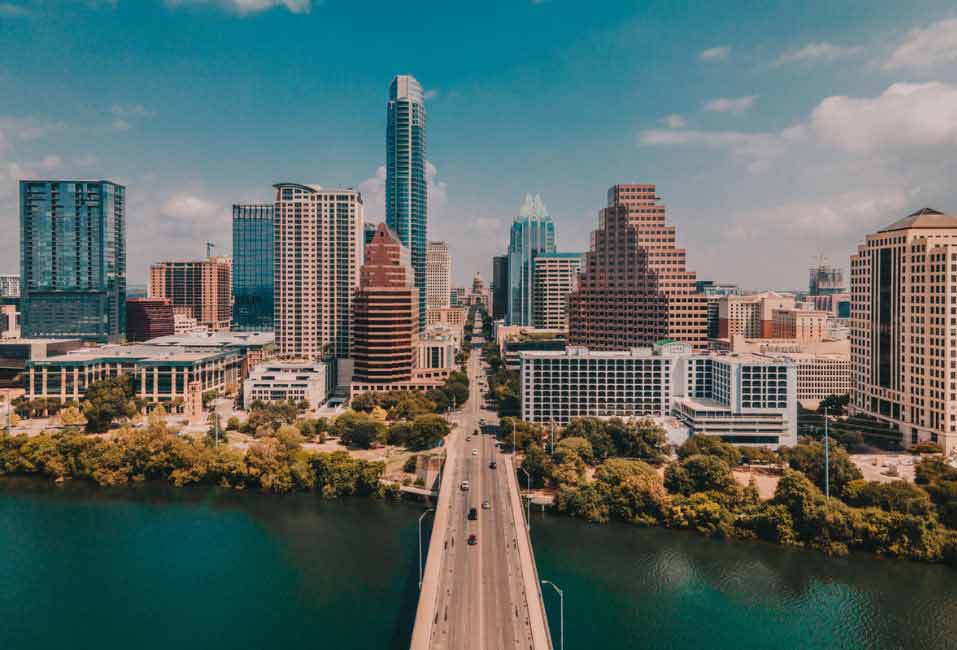
Choose LGR’s Austin Uber & Lyft Accident Attorneys
Do not let the complexity of layered insurance policies and corporate defense teams deny you the full compensation you deserve. Following a serious Austin Uber or Lyft accident, our "Rideshare Rapid Response" protocol ensures that critical app data and evidence are secured immediately. LGR focuses on untangling these unique liability disputes and aggressively negotiating against million-dollar commercial policies. Contact our experienced Austin rideshare accident lawyers today for a free consultation.
Contact Us for a Free Consultation