

The Texas Personal Injury Case You Think You Have Isn’t the One You Actually Have
A car accident, a slip and fall, a dog bite, a truck crash — from the outside, they look simple. Someone was hurt. Someone was at fault. The insurance company pays. That’s what the commercials on late-night TV suggest, anyway.
The reality of a Texas personal injury case is harder, slower, and involves more moving parts than most people realize. The insurance company has its own team investigating you from the first phone call. Texas law has specific rules about fault, damages, and deadlines that quietly cost people their cases when they get them wrong. Evidence that could prove your claim disappears within days if no one preserves it. And every decision you make in the first 72 hours — what you say at the scene, what you tell the adjuster, whether you sign the medical release — shapes what you can recover months later.
This guide walks through how an Austin personal injury case actually works, from the first hours after the accident through the resolution of a claim. It is written for people who were recently hurt or who are helping a family member through an injury case, and it reflects how LGR builds these cases in Austin and across Texas.
Key Takeaway
• Texas personal injury cases are harder and have more moving parts than most people expect.
• The insurance company’s investigation begins with the first phone call.
• Decisions in the first 72 hours shape what you can recover months later.
The First Hours After a Texas Accident: What to Do (and What Not to Do)
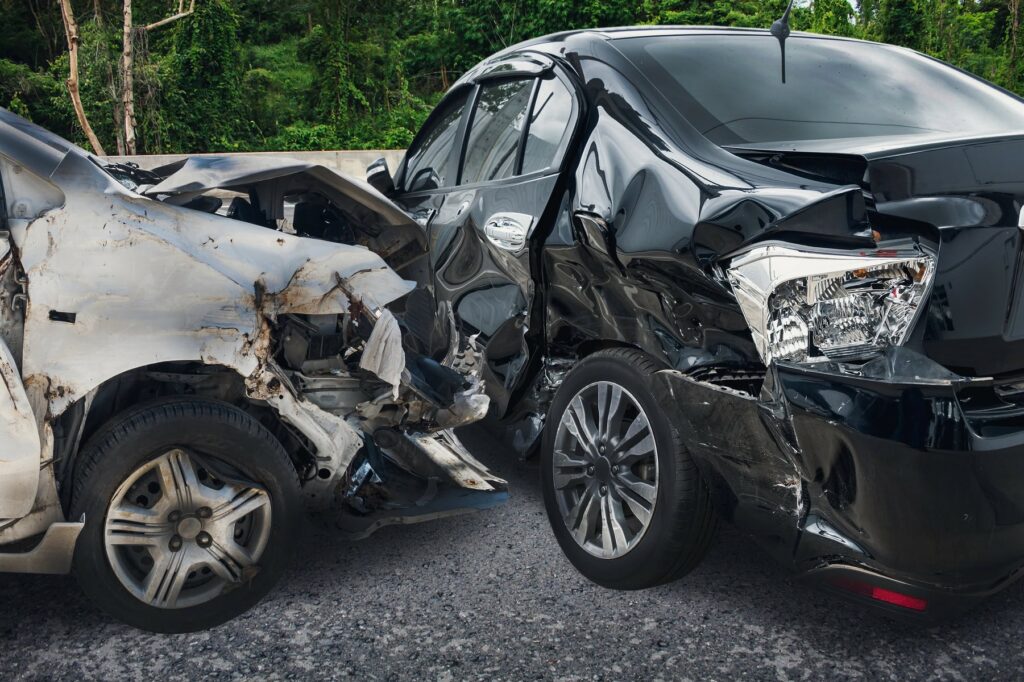
If you were just injured — whether in a car accident, a fall, a dog attack, or any other incident — the choices you make before you ever speak with a lawyer will affect your case.
The actions that consistently protect a claim:
• Call 911 and make sure a police report is generated. A written record of the scene is the foundation of most cases.
• Seek medical care immediately, even if your injuries feel minor. Adrenaline masks injury severity, and insurance companies routinely argue that a gap between the accident and the first medical visit means the injury wasn’t serious. This matters even more in cases involving serious and catastrophic injury, where early documentation is often the only way to tie a later diagnosis back to the incident.
• Document what you can at the scene, if it is safe to do so: photographs of the vehicles and positions, photographs of your injuries, the other party’s insurance information, and the names and contact information of any witnesses.
• Follow through on every medical recommendation. Skipping a follow-up, not filling a prescription, or stopping physical therapy early all get used by insurance adjusters to minimize the claim.
The actions that consistently damage a claim:
• Giving a recorded statement to the other side’s insurance adjuster. You are under no obligation to do this. Anything you say — even something as innocent as “I’m doing okay” — becomes evidence against your claim. This is particularly true in car accident cases, where insurers push for statements within hours of the crash.
• Signing a broad medical release that gives the insurer access to your entire medical history. Adjusters use these to look for prior conditions they can blame your current injury on.
• Posting on social media. Photographs of any activity can and will be used to argue you are not actually injured.
• Accepting the first settlement offer. Early offers are almost always designed to close the case before the full extent of the injury is known.
The single best move is to talk to a lawyer before you talk to the insurance company. A brief conversation is free, and most of the damage done to personal injury cases happens in the first 48 hours — before the injured party ever thinks to call an attorney.
Key Takeaway
• Call 911, seek immediate medical care, document the scene, and follow every medical recommendation.
• Don’t give a recorded statement, sign a broad medical release, post on social media, or accept the first offer.
• The single best move is talking to a lawyer before the insurance company.
Dealing with Insurance Companies: What Adjusters Actually Do
An insurance adjuster’s job is not to pay your claim fairly. It is to pay it as little as the adjuster can justify, and to close it as quickly as the adjuster can get you to sign.
That framing is not cynical — it is structural. Adjusters have performance reviews, case-closure targets, and internal guidelines that reward low settlements. The friendly tone of the initial call is part of the process, and so is the quick offer that follows once your medical bills start coming in. The Texas Department of Insurance regulates insurer conduct in the state, but enforcement is reactive, and everyday adjuster tactics operate in a gray zone that rarely triggers formal action.
A few of the tactics that show up in Texas personal injury cases again and again:
The rapid-contact call. The adjuster reaches out within hours of the accident, often before the injured party has even left the hospital. The goal is a recorded statement while memory is still unsettled and before a lawyer is involved. This happens in almost every car accident case we handle.
The “we just need to confirm a few things” medical release. Framed as a routine step, this release often gives the insurer sweeping access to unrelated medical history, which is then used to argue pre-existing conditions caused the injury.
The early lowball offer. A fast offer is designed to close the file before the injured party understands the true scope of their medical treatment, lost income, and long-term impact. Once accepted, these offers are final.
The pause and drag. When an injured party doesn’t accept the early offer, the insurer slows everything down — missing deadlines, requesting redundant documentation, shifting adjusters mid-claim. The strategy relies on financial pressure forcing a low settlement.
The surveillance file. In serious injury and truck accident cases, it is common for insurers to open a surveillance file on the claimant — social media review, sometimes private investigators — looking for evidence that can be used to argue the injury is exaggerated.
What protects you in this phase is a lawyer between you and the insurer. Once LGR is retained, every communication runs through us. Adjusters cannot call you, show up at your home, or pressure you into a statement. The claim moves on our timeline, not theirs.
Key Takeaway
• Adjusters are paid to minimize the claim and close the file quickly — the friendly tone is part of the process.
• Common tactics: rapid-contact calls, broad medical releases, early lowball offers, delay-and-drag, and surveillance.
• Once a lawyer is retained, every communication runs through the firm and the claim moves on your timeline.
The Personal Injury Cases We Handle in Austin
Personal injury is a broad category. The specifics of building a case — what evidence matters, which experts are needed, how fault is evaluated — change significantly depending on the type of incident. The practice areas below represent the Austin personal injury cases LGR most frequently handles.
Car accidents. The largest share of Texas personal injury cases and the first place most clients come to us. Comparative fault, uninsured motorists, and medical-cost inflation make even a “simple” rear-end collision more complex than most people expect. Read more about our approach to car accident cases, including how we handle disputed-fault cases.
18-wheeler and tractor-trailer crashes. Federal Motor Carrier Safety Regulations, Electronic Logging Device data, and motor-carrier liability make these cases fundamentally different from standard auto accidents. Federal rules for commercial drivers are set by the Federal Motor Carrier Safety Administration (FMCSA). Learn more about how we handle 18-wheeler truck accident cases.
Other commercial vehicle accidents. Delivery trucks, box trucks, tow trucks, company vehicles, and commercial fleet incidents all carry their own liability patterns — often involving multiple defendants and layered insurance coverage. We build commercial vehicle cases on the same federal-regulation foundation as our 18-wheeler work.
Motorcycle accidents. Motorcycle riders in Texas face a particular fight — juries and adjusters alike carry bias against motorcyclists, and insurers often use that bias to discount legitimate claims. Our approach to motorcycle accident representation is built on neutralizing that bias through evidence.
Drunk driving crash victims. When someone else’s intoxication causes your injury, the case is both a standard negligence claim and, potentially, a gross-negligence claim that unlocks exemplary damages. See our drunk driving accident page for more.
Wrongful death claims. When the injury is fatal, the claim becomes a statutory wrongful death action brought by the spouse, children, or parents of the deceased. These cases carry their own procedural rules and damages framework. Learn about our wrongful death practice.
Dog bites and animal attacks. Texas follows a modified “one-bite rule” that affects owner liability in dog bite cases. Read about how we handle dog bite claims.
Drowning accidents. Pool, spa, and open-water drowning incidents — especially those involving children — raise issues of premises liability, adequate supervision, and safety-code compliance. See our swimming pool drowning accident page for more.
Electrocution and burn injuries. Workplace and industrial electrical incidents — particularly at power plants, construction sites, and oilfields — can cause severe burns and lasting injuries. These cases often involve layered liability across employers, contractors, and equipment manufacturers, and frequently fall within the broader category of serious and catastrophic injury.
This is not a complete list. If you were injured in an incident that doesn’t obviously fit one of the categories above, the first conversation is still free, and we will tell you honestly whether we think there is a case.
Key Takeaway
• Austin personal injury covers car and truck crashes, commercial vehicles, motorcycles, drunk-driving victims, wrongful death, dog bites, drowning, and more.
• Evidence, experts, and liability analysis change significantly with the case type.
• If your injury doesn’t fit a clear category, the first conversation is still free.
How a Personal Injury Case Actually Gets Built
Most people picture a personal injury case as a courtroom trial. Most cases never see a courtroom. The real work of building a personal injury case happens in the months between the accident and the settlement — or, when it gets that far, the months between the demand letter and the mediation.
A serious personal injury case typically includes:
Fact investigation. Police reports, scene photographs, witness interviews, surveillance camera footage, black-box data from vehicles (including Electronic Control Module downloads in commercial vehicle cases), cell phone records where applicable, and physical re-examination of the scene if needed. Our guide on federal trucking regulations violations in accident claims explains how we turn regulatory data into evidence in commercial-vehicle cases.
Medical documentation. Complete treatment records, diagnostic imaging, specialist evaluations, and often an independent medical examination. In cases involving brain injury or long-term permanent injury, life-care planners and vocational experts quantify the future costs.
Liability analysis. Under Texas’s modified comparative negligence rule, fault can be apportioned across multiple parties. Identifying every potentially liable party — and the evidence supporting liability against each — is often what determines the difference between a partial recovery and a full one.
Damages modeling. Economic damages (medical expenses, lost income, property damage) are quantifiable. Non-economic damages (pain, mental anguish, impairment) and exemplary damages in gross-negligence cases require expert support and careful presentation.
Negotiation and, when necessary, litigation. A strong demand letter backed by complete evidence moves most cases toward settlement. Cases that don’t resolve go into formal litigation — depositions, expert reports, mediation, and occasionally trial.
The quality of the work in the first phases — investigation, documentation, liability analysis — is almost always what determines the final outcome. By the time an insurer is responding to a demand letter, the case is effectively already built.
Key Takeaway
• Most personal injury cases settle — the real work happens before any negotiation.
• Case-building spans five phases: fact investigation, medical documentation, liability analysis, damages modeling, and negotiation or litigation.
• Outcomes are determined by early-phase work, not by what happens at the demand-letter stage.
What Your Texas Personal Injury Case Could Be Worth
Texas law allows injured plaintiffs to recover three categories of damages:
Economic damages. These are the verifiable financial losses tied to the injury — past and future medical expenses, lost wages, lost earning capacity, property damage, rehabilitation and long-term care costs, and any modifications required to your home or vehicle because of a disability. In serious and catastrophic injury cases, economic damages often grow into the millions over a lifetime of care.
Non-economic damages. These cover the harm that doesn’t come with a receipt: physical pain and suffering, mental anguish, physical impairment, disfigurement, and loss of consortium for spouses and families pursuing wrongful death claims.
Exemplary (punitive) damages. Available in Texas when the at-fault conduct rises to gross negligence — for example, a drunk driver, or a trucking company that knowingly allowed a driver to violate Hours of Service rules. Exemplary damages are subject to the statutory caps set out in Chapter 41 of the Texas Civil Practice and Remedies Code.
Every case is different. The value of a specific case depends on injury severity, available insurance and assets, the strength of the liability evidence, the quality of the documentation, and the specific facts of the incident. Responsible Texas law firms do not quote average settlement values, because case value is determined by the facts — not by averages.
Key Takeaway
• Texas allows three damage categories: economic, non-economic, and exemplary (capped under Chapter 41 of the Texas Civil Practice and Remedies Code).
• Catastrophic-injury economic damages can grow into the millions over a lifetime of care.
• Responsible Texas firms do not quote average settlement amounts — case value is determined by the facts.
LGR in the News
Texas media outlets and national legal programs regularly ask LGR — particularly managing partner Tray Gober — to weigh in on complex personal injury, commercial vehicle, and wrongful-death stories. A selection of recent appearances:
• Tray Gober Breaks Down New Details in Texas Bus Crash — on-air analysis of a recent Texas commercial vehicle incident.
• Tray Gober Weighs In: Insights on Bakersfield Officer’s Fatal Crash Case — fatal-crash legal analysis.
• Litigators Weigh Strategy as Lawsuits Fly Over Flood Deaths at Camp Mystic — legal commentary on emerging wrongful-death litigation.
• Parents of 15 Girls Who Died in Texas Flood Sue Camp Mystic in Four Lawsuits — coverage of the Camp Mystic wrongful-death litigation.
• Tray Gober Shares Expert Legal Analysis on Young Thug RICO Trial with Law & Crime — national-outlet appearance.
• Baltimore Bridge Collapse: What We Know So Far — commercial transportation incident analysis.
See the full press archive on our /media/ page.
Frequently Asked Questions About Texas Personal Injury Cases
How long do I have to file a personal injury lawsuit in Texas?
Texas’s statute of limitations for most personal injury claims is two years from the date of the injury. Wrongful death claims follow a two-year limit from the date of death. There are narrow exceptions — claims against government entities, claims involving minors, and certain medical claims can involve shorter notice periods or different deadlines — so speaking with a lawyer quickly protects your rights.
Do I need a lawyer for a personal injury case in Austin?
Talking with an attorney before talking with the insurance company protects you in either direction — it tells you whether you have a case worth pursuing and prevents the early missteps that quietly cost people their claims. For incidents involving serious injuries, disputed fault, multiple parties, commercial vehicles, wrongful death, or insurer pushback, an attorney’s involvement is significant. The first conversation is free, and there is no obligation to retain the firm afterward.
What is modified comparative negligence in Texas?
Texas follows the 51% Bar Rule. A plaintiff can recover damages if they are 50% or less at fault, but recovery is reduced by the plaintiff’s percentage of fault. If the plaintiff is found to be 51% or more at fault, they recover nothing. This makes fault evaluation and allocation one of the most important elements of any Texas personal injury case.
How much does it cost to hire LGR Law Firm?
Personal injury cases are handled on a contingency fee basis. You pay no attorney fees unless and until we recover compensation for you. The initial consultation is free.
What is the average settlement for a personal injury case in Texas?
Settlement values vary significantly based on injury severity, liability evidence, available insurance, and the specific facts of the case. Responsible Texas law firms do not quote average settlement amounts. We provide case-specific evaluations after reviewing the facts.
Should I accept the insurance company’s first offer?
Almost never. Early offers are structured to close the claim before the full scope of medical treatment, lost income, and long-term impact is understood. Once you accept a settlement, the case is over — there is no re-opening it if your injury turns out to be more serious than initially diagnosed.
Can I still recover if I was partially at fault?
Yes, as long as you are found to be 50% or less at fault under Texas’s modified comparative negligence rule. Your recovery is reduced by your percentage of fault — a 20% fault finding reduces a $100,000 verdict to $80,000. If you are found 51% or more at fault, you recover nothing.
What evidence is most important in a personal injury case?
The police report, photographs of the scene and injuries, witness statements, all medical records, any available video footage (traffic cameras, dashcams, surveillance), and in commercial vehicle cases, the vehicle’s black-box data, the at-fault party’s phone records, and expert reconstruction. The faster evidence is preserved, the stronger the case.
Does LGR Law Firm handle cases outside of Austin?
Yes. Austin is our headquarters and we maintain a second Texas office in Terrell. The firm represents clients throughout Texas, and we also handle cases in Colorado, Louisiana, and Pennsylvania.
What happens if the case goes to trial?
Most personal injury cases settle before trial, but we prepare every case for trial from day one. That readiness is what gives us leverage at the negotiating table — insurance companies treat firms differently when they know the file is being built for a courtroom. For cases that do proceed, the trial process involves jury selection, presentation of evidence and expert testimony, and ultimately a verdict. LGR has 30+ years of combined trial experience — we do not hesitate to take a strong case to a jury when the insurance company will not offer a fair settlement.
When You’re Ready to Talk
Not every injury needs a lawyer. But it costs you nothing to discuss your injuries with an attorney before making that decision. If the insurance company is already pressuring you, or if you just want to understand your options, the first conversation is free and there is no obligation.
Call (512) 800-8000 — our Austin office answers 24/7 for serious injury cases. Or request a free case review.

About The Author
Kenneth "Tray" Gober III, J.D., is the Managing Partner of Lee, Gober & Reyna, PLLC in Austin, Texas. A 2005 magna cum laude graduate of Texas A&M University and a cum laude graduate of Baylor Law School, Tray is admitted to the State Bars of Texas (Bar No. 24061986), Colorado, Louisiana and Pennsylvania. He is also admitted to the U.S. Supreme Court, U.S. Court of Appeals for the Fifth Circuit, U.S. District Court — Western District of Texas and U.S. District Court — Eastern District of Texas.
He represents personal injury clients across Texas in car accidents, truck accidents, autonomous vehicle claims, wrongful death, drunk driving collisions, premises liability, and product liability matters. He is one of Texas's most frequently quoted legal voices on the law surrounding autonomous vehicles and AI-driven transportation. Tray also served as an adjunct professor of Paralegal Studies at the University of Texas School of Law.