

Not long ago, a horrific car crash killed six people at Highland Hills Drive and Bonnie View Road in Dallas. It was not that late at night – just ten minutes after nine. All six killed were traveling in a 2004 Chevrolet Impala that lost control while heading south on Bonnie View Road.
Careening out of control, the car clipped a curb with a rear tire, hit the median on the other side of the road and slammed into a tree on the passenger’s side of the vehicle. Even though emergency response personnel arrived quickly, they had to call for reinforcements to extricate those trapped in the wreckage. Four were pronounced dead at the scene. Two were taken to a nearby hospital, where they died later. More than one of the victims were children. Three were high school students.
An investigation has revealed that speed was a factor in the wreck. The posted limit in the area is 40 mph, and eyewitnesses have reported that the car had been going at least 50 to 60 mph. Alcohol has been ruled out as a contributing cause to the accident.
It is not yet clear if the six people in the vehicle were all related or not. The family members of the deceased may wish to consider filing wrongful death lawsuits, citing reckless driving and negligence on the part of the driver.
These kinds of cases are difficult for everyone. But in order to find the closure and financial support needed to move forward, many relatives choose to file a wrongful death suit. Wrongful death lawsuits are not meant for revenge. They seek justice and send a message to others: speed kills.
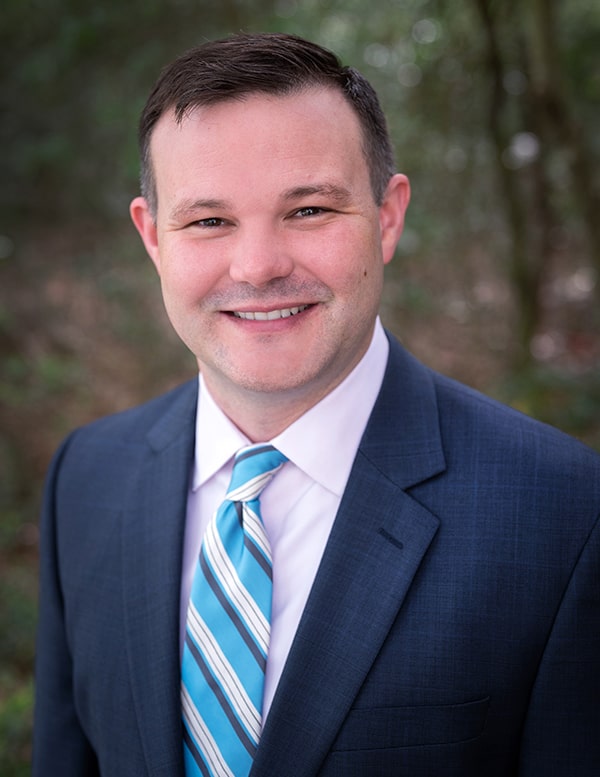
About The Author
Kenneth "Tray" Gober III, J.D., is the Managing Partner of Lee, Gober & Reyna, PLLC in Austin, Texas. A 2005 magna cum laude graduate of Texas A&M University and a cum laude graduate of Baylor Law School, Tray is admitted to the State Bars of Texas (Bar No. 24061986), Colorado, Louisiana and Pennsylvania. He is also admitted to the U.S. Supreme Court, U.S. Court of Appeals for the Fifth Circuit, U.S. District Court — Western District of Texas and U.S. District Court — Eastern District of Texas.
He represents personal injury clients across Texas in car accidents, truck accidents, autonomous vehicle claims, wrongful death, drunk driving collisions, premises liability, and product liability matters. He is one of Texas's most frequently quoted legal voices on the law surrounding autonomous vehicles and AI-driven transportation. Tray also served as an adjunct professor of Paralegal Studies at the University of Texas School of Law.