As of September 18, 2026, the National Highway Traffic Safety Administration (NHTSA) had three separate open matters involving Tesla’s driver-assistance and driverless technology, and one of them was opened the same day Tesla began operating driverless Cybercab vehicles commercially in Austin. If you were hurt in a crash involving a Tesla using Full Self Driving, those federal files may matter to you, but probably not in the way headlines suggest. LGR Law Firm handles autonomous and self-driving vehicle claims in Austin and across Texas. This article walks through what the agency had actually opened as of that date, what each stage of a federal investigation is, and what an open investigation can and cannot do for an individual injury claim. LGR Law Firm is not involved in any of the NHTSA investigations described in this article, and this article summarizes the agency’s own public documents.
What NHTSA Had Open as of September 18, 2026
Each of the three matters below has a published resume document stating its investigation number, the date it was opened, the type of proceeding, the estimated number of vehicles covered, and the specific subject under review. EA26002 and PE25012 are resumes from NHTSA’s Office of Defects Investigation (ODI). AQ26002 is a resume from the Office of Vehicle Safety Compliance (OVSC). As of September 18, 2026, all three were open and related to Tesla’s Full Self Driving software or its driverless vehicles.
- EA26002 — Engineering Analysis, opened March 18, 2026. Covers an estimated 3,203,754 vehicles: 2016-2026 Model S and X, 2017-2026 Model 3, 2020-2026 Model Y, and 2023-2026 Cybertruck equipped with FSD. Subject: “FSD Collisions in Reduced Roadway Visibility Conditions.” It was upgraded from an earlier preliminary evaluation, PE24031.
- PE25012 — Preliminary Evaluation, opened October 7, 2025. Covers an estimated 2,882,566 vehicles, described as all Tesla vehicles equipped with FSD (Supervised) or FSD (Beta). Subject: “Traffic safety violations while Full Self Driving (“FSD”) is engaged.”
- AQ26002 — Audit Query, opened September 3, 2026. Covers an estimated 1,000 Tesla Cybercab vehicles. Subject: “Tesla Cybercab FMVSS Certification.”
Each of these is a different kind of proceeding, and the differences are meaningful. In its November 2020 guidance on defect investigations and recalls, NHTSA describes a Preliminary Evaluation as the “initial phase of a NHTSA investigation,” prompted after a review of consumer complaints and/or manufacturer service bulletins suggests a safety defect may exist, and states that “the results of a PE determine whether the investigation will be upgraded to an Engineering Analysis or closed.” It describes an Engineering Analysis as the “second and final phase of a NHTSA investigation,” undertaken if data from a PE indicate further examination is warranted, whose results “determine whether a safety recall should be initiated or the investigation should be closed.” The same document says most PEs are resolved within four months and most EAs within one year. AQ26002 is not part of that defect-investigation sequence. It is an OVSC Resume, and it describes that matter in its own words as an examination of “the process and technical data on which Tesla relied when certifying the Cybercab and related issues.”
None of the three is a finding that a defect exists, and none of them is a recall. NHTSA’s guidance describes a separate step for that: where there is sufficient evidence of a safety defect and the manufacturer has not started a recall, the agency may convene a panel of its experts and stakeholders to review the investigation before issuing a Recall Request letter to the manufacturer.
The Reduced-Visibility Investigation: EA26002
The problem NHTSA describes in EA26002 is narrow and technical. The agency’s resume states it as a “Failure of the FSD’s degradation detection system, when encountering reduced roadway visibility conditions, to detect a degraded state and to warn the driver appropriately.” In plain terms, the question is not only whether the car sees poorly in bad conditions. The question is whether the car notices that it is seeing poorly and tells the driver in time.
That matters because of how the system is built. NHTSA writes that Tesla’s FSD “is an advanced driver assistance system (ADAS) that relies exclusively on vision-based cameras and the related FSD software to detect and respond to the roadway ahead.” In the crashes the agency reviewed, it says the system “did not detect common roadway conditions that impaired camera visibility and/or provide alerts when camera performance had deteriorated until immediately before the crash occurred.” The agency names glare and airborne obscurants as examples of degraded visibility. Of the additional crashes ODI identified when it reviewed Tesla’s responses, the resume states that “In each of these crashes, FSD also lost track of or never detected a lead vehicle in its path.”
The failure report summary attached to EA26002 lists 9 incidents, 9 crashes or fires, 2 injury incidents, 1 injury, 1 fatality incident, and 1 fatality. Two further points from the file are worth knowing. Tesla’s own post-incident analysis, as summarized by NHTSA, “indicated that the update to the degradation detection system, had it been installed on the vehicles at the time, may have affected 3 of the 9 incidents identified by ODI.” And NHTSA records that Tesla described internal data and labeling limitations that prevented uniform identification of crashes with the system engaged, adding that the agency “believes this limitation could have led to under-reporting of subject crashes over portions of the defined time-period.”
KEY TAKEAWAY: EA26002 is about warnings and timing, not just camera performance. NHTSA states that in the crashes it reviewed, the system “did not detect common roadway conditions that impaired camera visibility and/or provide alerts when camera performance had deteriorated until immediately before the crash occurred.” The agency names glare and airborne obscurants as its examples of degraded visibility, so if your crash happened in conditions like those while FSD was engaged, the conditions at the scene may be worth documenting in detail.
The Red-Light and Wrong-Way Investigation: PE25012
PE25012 addresses conduct that any Texas driver would recognize as a traffic violation. NHTSA describes the problem as “Traffic safety law violations involving Tesla vehicles operating with FSD engaged, including proceeding through red traffic signals and driving against the proper direction of travel on public roadways.”
The opening resume, dated October 7, 2025, lists 58 incidents, 14 crashes or fires, 10 injury incidents, 23 injuries, and no reported fatalities. Within that file, the agency identified 18 complaints and 1 media report alleging that a Tesla at an intersection with FSD engaged “failed to remain stopped for the duration of a red traffic signal, failed to stop fully, or failed to accurately detect and display the correct traffic signal state in the vehicle interface.” It separately identified six Standing General Order reports in which a Tesla with FSD engaged “continued to travel into the intersection against the red light and was subsequently involved in a crash with other motor vehicles in the intersection,” and states that four of those crashes resulted in one or more reported injuries. The wrong-way scenario rests on 2 Standing General Order reports, 18 complaints and 2 media reports involving vehicles that entered opposing lanes, crossed double-yellow markings, or attempted to turn against wrong-way signage. NHTSA cautions that some complaints alleged more than one failure, so those sub-counts are not cumulative.
A later information request in the same file, dated December 3, 2025, states that the office “has received 62 complaints and has identified 4 media reports and 14 reports submitted under Standing General Order 2021-01.” Those numbers are not a restatement of the October figures. The opening resume of October 7, 2025 reports 58 total incidents in its failure report summary, while the December 3, 2025 information request reports complaints, media reports and Standing General Order reports as three separate counts. The two documents report different metrics on different dates. The resumes name Standing General Order reports among the sources of the incidents they describe: PE25012’s “Prompted By” field lists VOQs, Standing General Order reports and media reports.
One line in PE25012 shapes the legal picture more than any count. NHTSA writes that “Tesla characterizes FSD as an SAE Level 2 partial automation system requiring a fully attentive driver who is engaged in the driving task at all times,” and that “the driver remains fully responsible at all times for driving the vehicle, including complying with applicable traffic laws.” The agency says its investigation will focus in particular “on whether certain driving inputs within the control authority of FSD forestall the driver’s supervision when they are unexpectedly performed,” and notes that some reported incidents “appeared to involve FSD executing a lane change into an opposing lane of travel with little notice to a driver or opportunity to intervene.”
KEY TAKEAWAY: NHTSA’s PE25012 file records that Tesla characterizes FSD as an SAE Level 2 partial automation system, and the same file states that the driver remains fully responsible at all times for driving the vehicle, including complying with traffic laws. Who may be legally responsible in a given crash is a separate question, and our post on Tesla Autopilot and self-driving car accident claims in Texas covers it.
The Cybercab Audit in Austin and the Special Order Tesla Must Answer by September 30
The third matter is the one closest to home. NHTSA’s Audit Query resume states that on September 3, 2026, “Tesla began commercial deployment with a small number of its Cybercab vehicles in Austin, Texas.” Tesla notified the agency that it had certified those vehicles as compliant with all applicable Federal Motor Vehicle Safety Standards, and that it plans to gradually expand commercial deployment to additional vehicles and locations. The resume also states that the vehicles “lack permanently attached, conventional manual controls, such as a brake pedal, gas pedal, steering wheel, and mirrors.”
NHTSA opened AQ26002 the same day to examine “the process and technical data on which Tesla relied when certifying the Cybercab and related issues,” and says it will consider “the extent to which Tesla’s certification depended on determinations that certain FMVSS are inapplicable to the Cybercab.” Vehicle manufacturers in the United States certify their own compliance with federal safety standards. The agency calls that self-certification “a foundational responsibility for vehicle manufacturers under the National Traffic and Motor Vehicle Safety Act of 1966,” and cites the statute providing that a person may not issue a certification of compliance “if, in exercising reasonable care, the person has reason to know the certificate is false or misleading in a material respect.”
NHTSA then escalated. On September 10, 2026 it issued a Special Order directed to Tesla under 49 U.S.C. § 30166(g)(1)(A) and 49 CFR §§ 510.7 and 510.8, addressed to two Tesla in-house legal and regulatory officers, and requiring a response to the agency’s Office of the Chief Counsel by September 30, 2026. The response must be signed under oath and accompanied by an affidavit from a responsible Tesla officer. The order warns that failing to respond fully or truthfully may result in a referral to the Department of Justice and civil penalties of up to $27,874 per day, to a maximum of $139,356,994 for a related series of daily violations, and that falsifying or withholding information may lead to criminal penalties including imprisonment of up to 15 years.
The order contains 21 requests. Among them, NHTSA asks Tesla to state the SAE automation level, the total number of subject vehicles, every location where the vehicles are commercially operating or where Tesla anticipates operating them, each FMVSS Tesla certified against, “how Tesla determined which FMVSS (or parts thereof) were applicable,” whether the vehicles can be driven by a human using temporarily attached controls, and any information indicating the vehicles do not comply with an applicable standard. For an Austin resident, that is a federal agency asking basic questions, in writing and requiring a sworn answer, about vehicles already sharing local streets.
What a Federal Investigation Does and Does Not Mean for Your Claim
An open federal investigation is a useful fact. It is not a verdict, and treating it as one can lead a claim in the wrong direction.
Here is what it is not. An investigation is not a finding that a defect exists. It is not a recall. It does not establish that Tesla caused any particular crash, and it does not establish that any individual driver was or was not at fault. The incidents described in these files come from consumer complaints, media reports and manufacturer-submitted reports, and the agency’s own documents describe them in allegation language. PE25012 identifies complaints and media reports “alleging” particular FSD behavior, and notes that “Some complaints alleged that more than one of these failures occurred.” Nothing in these documents says what will happen next, and no one should assume a particular outcome from the fact that a file is open.
Here is what it can be. The files are public documents that describe, in the agency’s words, the specific behaviors under review and the estimated vehicle populations involved. They also record what the agency put to the manufacturer and when: the December 3, 2025 information request in PE25012 and the September 10, 2026 Special Order in AQ26002 were both served on Tesla. And because the scope of each matter is written down, you can compare what happened in your crash against what regulators say they are examining.
None of that substitutes for proving your own case. A Texas injury claim still turns on the specific vehicle, the specific software state, the specific conditions, and the specific conduct at that intersection on that day. Our article on autonomous car accidents and the available data covers the data side of these crashes. Texas rules also apply regardless of what the federal file says. There is generally a two-year statute of limitations for personal injury claims. Texas also follows a modified comparative negligence rule, sometimes called the 51% bar: Texas Civil Practice and Remedies Code § 33.001 provides that a claimant “may not recover damages if his percentage of responsibility is greater than 50 percent,” which means a person found 51 percent or more responsible cannot recover at all. If a claimant is not barred, § 33.012 requires the court to reduce the damages recovered “by a percentage equal to the claimant’s percentage of responsibility.”
KEY TAKEAWAY: Treat the NHTSA files as context, not as proof of fault. They may help explain how a system behaves and what the agency asked the manufacturer and when it asked, but your claim will still depend on the facts of your own crash and on the Texas deadlines and fault rules that apply to it.
If You Were Hurt in a Tesla FSD or Robotaxi Crash in Texas
In EA26002, NHTSA records that Tesla described internal data and labeling limitations that prevented a uniform identification and analysis of crash events with the system engaged, and that ODI believes this limitation could have led to under-reporting of subject crashes. Austin is LGR’s home market, and it is also where the Cybercab deployment described in AQ26002 began. If you were injured in a crash involving a Tesla using FSD, or a driverless vehicle, you can talk with our team about your situation at no cost. If LGR does not win your case, you owe no attorney fee and no case expenses.
Call (512) 800-8000 or contact LGR Law Firm for a free consultation. You can also read more about how we handle car accident claims in Austin, Terrell and across Texas.
Frequently Asked Questions
What is Tesla FSD, and who is responsible for driving when it is engaged?
NHTSA describes Tesla’s Full Self Driving as an advanced driver assistance system that relies exclusively on vision-based cameras and the related FSD software to detect and respond to the roadway ahead. In its PE25012 file, the agency notes that Tesla characterizes FSD as an SAE Level 2 partial automation system requiring a fully attentive driver who is engaged in the driving task at all times, and states that the driver remains fully responsible at all times for driving the vehicle, including complying with applicable traffic laws. Who may be legally responsible after a particular crash is a separate question, and our post on Tesla Autopilot and self-driving car accident claims in Texas covers it.
Does an open NHTSA investigation mean Tesla has been found at fault?
No. An open investigation is a review, not a conclusion. It is not a finding that a defect exists and it is not a recall. The incidents catalogued in these files come from consumer complaints, media reports and manufacturer-submitted reports, and the agency’s resumes describe them in allegation language. PE25012 identifies complaints and media reports alleging particular FSD behavior, and notes that some complaints alleged that more than one of these failures occurred. An open file shows that the agency has described a concern in a public document as of a certain date, but responsibility for any individual crash still has to be proven with the evidence from that crash.
What is the difference between an Audit Query, a Preliminary Evaluation and an Engineering Analysis?
These are different stages and types of federal review, and each NHTSA document states its own type. NHTSA describes a Preliminary Evaluation, such as PE25012, as the initial phase of an investigation, and says the results of a PE determine whether the investigation is upgraded to an Engineering Analysis or closed. It describes an Engineering Analysis, such as EA26002, as the second and final phase, whose results determine whether a safety recall should be initiated or the investigation should be closed, and EA26002’s own resume states that it was upgraded from an earlier preliminary evaluation numbered PE24031. AQ26002 is not part of that defect-investigation sequence. It is an OVSC Resume, and it describes that matter as an examination of the process and technical data on which Tesla relied when certifying the Cybercab and related issues.
How many vehicles do these Tesla investigations cover?
The estimates come from each NHTSA resume. EA26002, the reduced-visibility engineering analysis opened March 18, 2026, lists an estimated 3,203,754 vehicles, covering 2016-2026 Model S and X, 2017-2026 Model 3, 2020-2026 Model Y, and 2023-2026 Cybertruck equipped with FSD. PE25012, the traffic-violation preliminary evaluation opened October 7, 2025, lists an estimated 2,882,566 vehicles equipped with FSD (Supervised) or FSD (Beta). AQ26002, the Cybercab audit query opened September 3, 2026, lists an estimated 1,000 vehicles.
Do the Cybercab vehicles operating in Austin have a steering wheel or pedals?
According to NHTSA’s AQ26002 resume, they do not. The agency writes that the vehicles lack permanently attached, conventional manual controls, such as a brake pedal, gas pedal, steering wheel, and mirrors. The same document states that Tesla began commercial deployment with a small number of Cybercab vehicles in Austin, Texas on September 3, 2026, and notified the agency that it certified them as compliant with all applicable Federal Motor Vehicle Safety Standards. One of the 21 requests in NHTSA’s related Special Order asks whether the vehicles can be driven by a human using temporarily attached controls.
How long do I have to file an injury claim in Texas after a self-driving car crash?
Texas generally applies a two-year statute of limitations to personal injury claims. The safest approach is to have your situation reviewed well before the two-year mark rather than close to it, and to confirm with our office which deadline applies to your own claim rather than assuming the general rule is the one that governs your case. If you are unsure, contact LGR at (512) 800-8000 and ask.
Can I still recover compensation if I was partly at fault?
Possibly. Texas uses a modified comparative negligence rule, sometimes called the 51% bar. Texas Civil Practice and Remedies Code Section 33.001 provides that a claimant may not recover damages if his percentage of responsibility is greater than 50 percent, which means a person found 51 percent or more responsible for a crash cannot recover. If a claimant is not barred, Section 33.012 requires the court to reduce the damages recovered by a percentage equal to the claimant’s percentage of responsibility. How fault is apportioned depends on the evidence in your specific case, including what the vehicle was doing and what the driver could reasonably have done. Because that analysis is fact-specific, it is worth discussing your crash with an attorney before assuming you have no claim.
What does it cost to talk to LGR about a self-driving car crash?
Nothing. LGR offers a free consultation, and the firm works on a contingency fee basis. If LGR does not win your case, you owe no attorney fee and no case expenses. You can reach the firm at (512) 800-8000 or through the contact page. LGR is a personal injury firm with offices in Austin and Terrell, licensed statewide in Texas, and its practice areas include claims involving autonomous and self-driving vehicles.
Attorney responsible for this content: Tray Gober (Kenneth Parks Gober, III), Managing Partner, LGR Law Firm, 11940 Jollyville Road, Suite 220-S, Austin, TX 78759.
This information is for educational purposes and does not constitute legal advice. Every case is unique — contact our office for a free consultation about your specific situation. Past results do not guarantee future outcomes.
About The Author
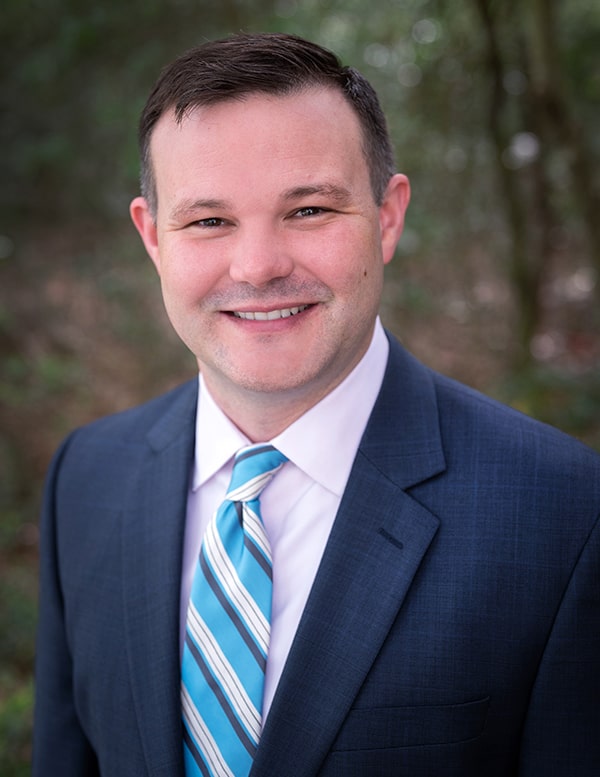
Kenneth "Tray" Gober III, J.D., is the Managing Partner of Lee, Gober & Reyna, PLLC in Austin, Texas. A 2005 magna cum laude graduate of Texas A&M University and a cum laude graduate of Baylor Law School, Tray is admitted to the State Bars of Texas (Bar No. 24061986), Colorado, Louisiana and Pennsylvania. He is also admitted to the U.S. Supreme Court, U.S. Court of Appeals for the Fifth Circuit, U.S. District Court — Western District of Texas and U.S. District Court — Eastern District of Texas.
He represents personal injury clients across Texas in car accidents, truck accidents, autonomous vehicle claims, wrongful death, drunk driving collisions, premises liability, and product liability matters. He is one of Texas's most frequently quoted legal voices on the law surrounding autonomous vehicles and AI-driven transportation. Tray also served as an adjunct professor of Paralegal Studies at the University of Texas School of Law.