

If you were hurt in a crash in Round Rock, Kyle, or Georgetown, you already have enough to deal with — medical bills, missed work, and insurance adjusters calling. And now you are wondering whether the county even matters. It does, but probably not in the way you think.
The Austin metro reaches well past the Austin city limits. People live in Round Rock, commute through San Marcos, and get hurt in car accidents in Cedar Park, Kyle, Georgetown, and Buda every day. If your accident happened outside Travis County, one question comes up fast. Where does your claim go, and does that change anything about your rights?
Here is the short answer. The county where your accident happened usually decides which court would hear a lawsuit. Lawyers call that “venue.” But the Texas law that protects you is the same everywhere in the state. LGR Law Firm is an Austin-based personal injury firm. Our attorneys are licensed in Texas and represent injured people across the Austin metro. This guide explains how venue works, why the county can matter, and what stays the same no matter where you were hurt.
What Is “Venue” in a Texas Personal Injury Case?
“Venue” is the legal term for which county’s courts can hear a lawsuit. It is a separate question from whether you have a valid claim. Venue only decides where that claim would be filed if a lawsuit becomes necessary.
The Texas venue rules are in Chapter 15 of the Texas Civil Practice and Remedies Code. A personal injury lawsuit generally belongs in the county where the accident happened. In many cases it can also be filed where the defendant lives. For a typical car accident claim, that usually means the county where the crash took place. An attorney who regularly handles car accident claims across the region can confirm the proper venue for your facts. It helps to sort that out early, before it becomes an issue.
KEY TAKEAWAY
Venue only decides which county’s courts would hear your case if it goes to a lawsuit. It does not change whether your claim is valid or what compensation you may be able to pursue. Most venue questions are settled by one of two answers — the county where the accident happened, or the county where the defendant lives.
How Texas Law Decides Which County Hears Your Case
Chapter 15 looks at where the accident happened and where the defendant lives. Straightforward cases usually have one clear answer. Take a wreck on I-35 in Williamson County. That case generally belongs in Williamson County’s courts. That is where the events occurred, and it is often where a Texas-resident defendant lives.
Cases get more complicated in a few situations. The drivers may come from different counties. The defendant may live out of state. A commercial vehicle may be owned by a company headquartered elsewhere. In those situations, more than one county’s courts may be a proper venue. The choice can affect how a case is scheduled and litigated. This is a fact-specific question worth handing to an attorney rather than guessing about.
It is also worth remembering that most personal injury claims in Texas resolve through negotiation with the insurance company. They never reach a courtroom at all. Venue only becomes relevant once a lawsuit is filed.
Does the County Change the Law That Protects You?
The substantive law does not change from one Texas county to the next. The rules that determine fault, the deadline for taking action, and the types of compensation available are the same everywhere. That holds whether your accident happened in Austin, Georgetown, or San Marcos.
What can differ are the practical details. Each county’s courts run their own dockets and procedures. Jury pools reflect the community they are drawn from. Local roads and accident patterns vary too. A firm that regularly handles cases across the metro understands these differences. It can prepare your claim no matter where it arose. See our overview of the personal injury claim process in Austin for a broader look at how a claim moves toward resolution.
KEY TAKEAWAY
Your basic rights after an accident are identical in every county in the Austin metro. That includes the deadline to act and the types of compensation you can pursue. Venue changes where a case is filed, not the law that applies to it.
The Counties Around Austin
Most people hurt outside Travis County live or were injured in one of a handful of nearby counties. Williamson County is home to Round Rock, Cedar Park, Georgetown, and Leander. Its cases are generally handled in Georgetown, the county seat. Hays County covers San Marcos, Kyle, Buda, and Dripping Springs along the southern I-35 corridor. Its cases are generally handled in San Marcos. Bastrop and Caldwell counties sit east and southeast of Austin. Each is handled in its own county courts.
These are general patterns, not guarantees for every case. The exceptions discussed above can shift where a specific claim belongs. LGR Law Firm represents injured people throughout the Austin metro from our Austin office. You can see the full list of communities we serve on our locations page.
Do You Need a Lawyer Based in That County?
After an out-of-county accident, many people worry they need an attorney with an office in that county. You do not. What matters is whether your attorney knows the region and understands how cases proceed in the relevant courts. It also matters whether they have the resources and the willingness to take on an insurance company.
From our Austin office, LGR Law Firm handles the investigation, the communication, and any litigation your case requires. That is true wherever in the metro your accident happened. A firm that only works in one small area may not know how neighboring counties’ courts operate. It may also lack the bandwidth to take on a larger insurance company if a fair settlement is not offered.
Deadlines and Fault Rules That Apply No Matter the County
Two rules of Texas law apply the same way in every county.
First, Texas follows a modified comparative negligence rule. Your compensation may be reduced by your percentage of fault. Being found more than 50% at fault can bar you from recovering anything.
Second, the statute of limitations for most personal injury claims is generally two years from the date of the accident. That deadline comes from Texas Civil Practice and Remedies Code Section 16.003. Specific circumstances can affect it.
Acting promptly protects evidence like vehicle data and surveillance footage, which can disappear quickly. It also preserves your options while the deadline is still open. That urgency does not change from one county in the metro to the next.
KEY TAKEAWAY
Texas’s modified comparative negligence rule and the roughly two-year statute of limitations apply the same way statewide. That includes Travis, Williamson, Hays, Bastrop, and Caldwell counties. Waiting to act is the risk, not the county line.
Taking the Next Step
If you were hurt in an accident anywhere in the Austin metro, LGR Law Firm can help you figure out where your claim belongs. We can also walk you through what to do next. That work can include confirming the proper venue and investigating the crash. It can also include communicating with the insurance companies and preparing your case as if it may go to trial. The initial consultation is free and carries no obligation. Personal injury cases are typically handled on a contingency basis, which generally means you do not pay attorney’s fees unless we recover for you.
You can contact LGR Law Firm for a free, no-obligation consultation at (512) 800-8000.
Frequently Asked Questions
If I was hurt outside Travis County, where do I file my claim?
Generally, a personal injury lawsuit is filed in the county where the accident occurred. In many cases it can also be filed where the defendant resides. An accident in Williamson County would typically be handled in that county’s courts in Georgetown. A Hays County accident would be handled in San Marcos. There are exceptions depending on the facts, so it is worth having an attorney confirm the proper venue. Keep in mind that many claims settle through negotiation and never require a filing at all.
Does it cost more or take longer to handle an out-of-county case?
Not inherently. Investigating, valuing, and negotiating a claim works the same way across the metro. Personal injury cases are typically handled on a contingency basis regardless of county. Different courts have their own dockets, so timelines can vary somewhat. But the county itself does not change your fundamental rights or the contingency-fee arrangement. An attorney who works throughout the region can manage these logistics for you.
Do I need a lawyer located in the county where my accident happened?
No. What matters far more than a local office is whether your attorney knows the region. It also matters whether they understand how the relevant courts work, and whether they have the resources to take on the insurance companies. From our Austin office, LGR Law Firm regularly represents clients throughout Williamson County, Hays County, and the surrounding areas. We handle the investigation, the communication, and any litigation on your behalf.
Is the law different in Williamson or Hays County than in Austin?
No. Texas’s substantive law applies the same way across the state. That includes the modified comparative negligence rule, the generally two-year statute of limitations, and the types of compensation available. What differs between counties are practical details like court dockets, procedures, and jury pools. Your underlying right to pursue a claim does not change.
How long do I have to file if my accident was outside Travis County?
The same statewide deadline applies. For most personal injury claims it is generally two years from the date of the accident, though specific circumstances can affect it. The county where the accident happened does not change this. Evidence fades and the deadline is firm, so acting promptly is wise no matter where in the metro you were injured.
What if my accident involved drivers or events in more than one county?
Multi-county situations can raise venue questions. A lawsuit may be proper in more than one place, depending on where the events occurred and where the parties reside. These situations are fact-specific, and the choice can affect how the case proceeds. An attorney can evaluate the circumstances and determine the appropriate venue, then handle the filing details for you.
This information is for educational purposes and does not constitute legal advice. Every case is unique — contact our office for a free consultation about your specific situation. Past results do not guarantee future outcomes.
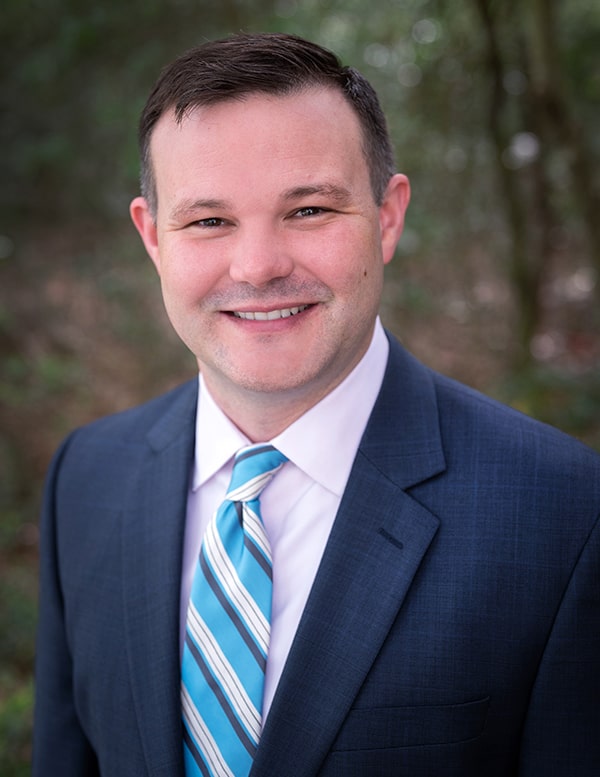
About The Author
Kenneth "Tray" Gober III, J.D., is the Managing Partner of Lee, Gober & Reyna, PLLC in Austin, Texas. A 2005 magna cum laude graduate of Texas A&M University and a cum laude graduate of Baylor Law School, Tray is admitted to the State Bars of Texas (Bar No. 24061986), Colorado, Louisiana and Pennsylvania. He is also admitted to the U.S. Supreme Court, U.S. Court of Appeals for the Fifth Circuit, U.S. District Court — Western District of Texas and U.S. District Court — Eastern District of Texas.
He represents personal injury clients across Texas in car accidents, truck accidents, autonomous vehicle claims, wrongful death, drunk driving collisions, premises liability, and product liability matters. He is one of Texas's most frequently quoted legal voices on the law surrounding autonomous vehicles and AI-driven transportation. Tray also served as an adjunct professor of Paralegal Studies at the University of Texas School of Law.